

WhatsApp Ordering for Supermarkets When You Already Have an App

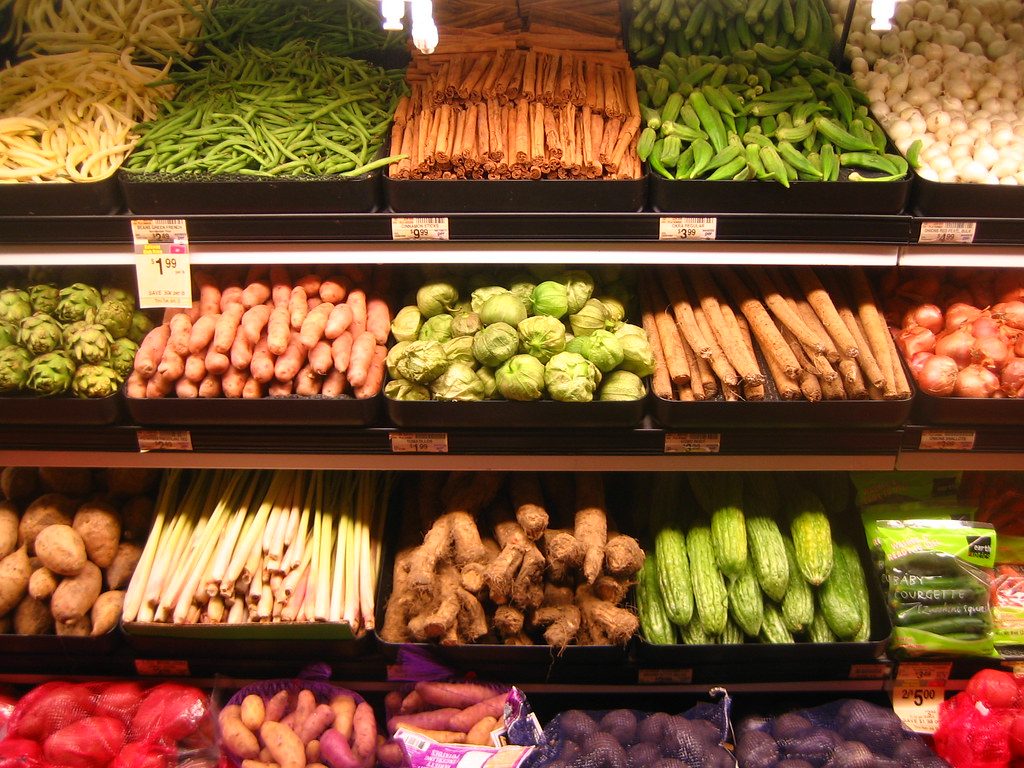
Photo by Sancho Papa on Flickr, CC BY 2.0
If most of your customers already order through your app, a WhatsApp ordering channel can look like a solution to a problem you do not have. It is a fair objection, and it is half right. The app is the better tool for some shoppers and some baskets. The question is not whether WhatsApp beats your app. It is whether there are customers and orders your app is not reaching at all.
Yes, a supermarket with an app should still take orders on WhatsApp, but as a parallel channel, not a replacement. The app wins for loyal customers browsing and comparing. WhatsApp wins for everyone who will never install the app, for traffic arriving from social media ads, for quick reorders and for shoppers who already know what they want. Feed both into the same order system and measure them separately.
Why "our customers already use the app" is only half the picture
An app only counts the people who installed it. Your app's order share tells you how the customers who downloaded it behave. It says nothing about the people who saw your weekly offers on social media, wanted three things, and were never going to install an app to buy them.
That second group is not small. In Meta's State of Business Messaging research, a survey of 11,056 consumers across 22 markets run from April to September 2025, 73.3% said they prefer messaging when communicating with a business, and 72.4% said they are more likely to buy from a brand that offers it. Saudi Arabia and the UAE are two of the 22 markets in that survey. It is Meta's own research about its own channel, so read it as a direction rather than a forecast for your store, but it is the best public number on the question.
The useful test is in your own data: what share of your social media traffic ends in an app install, and what share of your WhatsApp support messages start with "can I order" or "do you have". If both numbers are noticeable, there are orders leaking.
Where the app wins, and where WhatsApp wins
| Situation | Better channel | Why |
|---|---|---|
| Weekly shop by a loyal customer | App | Full catalogue, saved lists, aisle browsing, loyalty points |
| Comparing brands and sizes on a shelf | App | Product grids beat a chat for side by side comparison |
| First purchase from someone who saw an ad | No install, no account, one tap from the ad | |
| "Same as last week, plus milk" | A sentence is faster than rebuilding a basket | |
| A typed or photographed shopping list | The customer already wrote the order | |
| "What do I need to make pasta for six?" | A question, not a search term, which a conversation handles and a search bar does not | |
| A problem with an order already placed | Customers already go there for this, and it is where trust is won or lost |
The pattern is simple. The app is a store you walk around. WhatsApp is the phone call to the shop where someone knows you. Most supermarkets need both, and they serve different moments.
"Shoppers need to see products." They can, inside WhatsApp
The strongest objection to conversational grocery ordering is that people choose with their eyes. Nobody wants to describe the yoghurt they want in words. That was true of text only chat. It is not true of the WhatsApp Business Platform as documented today.
According to Meta's developer documentation on selling products, checked on 6 October 2026:
- A catalog of your products can be connected to your WhatsApp Business account.
- A single product message shows one item with its image, price and description.
- A multi-product message shows a curated selection of up to 30 products, organised into sections.
- With ordering enabled, customers add several items to a cart inside WhatsApp and submit one order, with up to 99 units of each item.
So the conversation does the narrowing and the catalogue does the showing. A customer asks for olive oil, the reply shows the four oils you stock with photos and prices, and they tap the one they want. That is closer to asking a shop assistant than to scrolling an app, and it still ends with the customer choosing.
How a WhatsApp order should reach your systems
A WhatsApp channel rarely fails because customers ignore it. It fails when it creates a second order book. An order typed into a chat, then retyped by a staff member into the real system, is slow, error prone and ends up switched off.
The setup that lasts has three parts:
- Identity from the phone number. On WhatsApp the customer's number identifies them. No sign up, no password. If they also have an app account, the number links the two, so addresses and history carry across.
- The same order pipeline. The WhatsApp order goes into the same order management or ERP system the app feeds, through an API, so stock, picking and delivery do not care which channel it came from. If there is no internal system to connect to, a standalone dashboard holds WhatsApp orders until there is.
- Separate measurement. Tag every order with its channel. You want to know what WhatsApp brings that the app did not, not a blended number that hides it.
We covered the integration side for delivery businesses in how to connect WhatsApp orders to fleet software. The principle is identical for grocery: one source of truth for orders, whatever the door.
What a supermarket should not put on WhatsApp
Not everything belongs in a chat. Full catalogue browsing is better in the app. Loyalty scheme mechanics, account settings and long order histories are app jobs. And anything that needs a human decision, such as a refund on a damaged delivery, should be handed to a person quickly rather than handled by automation. We wrote about where that line sits for retail in can AI actually handle retail customer service.
The other limit is cost. Replies inside a conversation the customer started are free on the WhatsApp Business Platform, but promotional messages you send first are charged per delivered message under Meta's pricing rules. A WhatsApp grocery channel works best when customers come to you, which is exactly why it pairs well with ads that open a WhatsApp chat. We go through that, and how to sell more inside each order, in how to upsell groceries on WhatsApp.
Where plumcut fits
plumcut builds and runs the conversation layer on top of a store's own catalogue, prices and offers. plum reads what the customer asks for, matches it to real products, shows options with images and prices, takes the order and sends it into the store's system, or into a standalone dashboard if there is no system to connect to yet. It runs next to the app, not instead of it. You can see the flow on how it works and the full scope on solutions.
What to do this week
Pull two numbers. First, the share of your WhatsApp support messages in the last month that were really an attempt to buy something: "do you have", "how much is", "can you deliver". Second, the click to install rate on your last social media campaign. If the first is above zero and the second is low, you have customers who want to order and a door that is too heavy for them. Start with one category, such as fresh produce or a weekly offer, on WhatsApp, routed into your existing order system, and compare it to the app for a month.
Questions people also ask
Should a supermarket take orders on WhatsApp if it already has an app?
Yes, as a second channel and not as a replacement. A grocery app is the better tool for a loyal customer browsing aisles and comparing products. WhatsApp is the better tool for customers who will never install the app, for people arriving from a social media ad, for quick reorders and for customers who already know what they want and would rather type a list. Run both, send WhatsApp orders into the same order system as app orders, and measure each channel separately.
Can customers see products and prices when ordering groceries on WhatsApp?
Yes. The WhatsApp Business Platform supports catalogs connected to the business account, single product messages that show one item with its image, price and description, and multi-product messages that show up to 30 products organised into sections. When ordering is enabled, customers can add several items to a cart inside WhatsApp and submit one order, with up to 99 units of each item.
Do WhatsApp grocery orders need a separate system from app orders?
They should not. A WhatsApp order should arrive in the same order management or ERP system the app feeds, through an API, so stock, picking and delivery treat it like any other order. Where no internal order system exists, a standalone dashboard can list WhatsApp orders until an integration is built. Two separate order books mean retyping, errors and a channel that staff quietly stop using.
Does a customer need an account to order groceries on WhatsApp?
No. On WhatsApp the customer's phone number identifies them, so there is no sign up, no password and no app download. The business can match that number to an existing loyalty or app account if one exists, and saved addresses and order history can follow the customer across both channels.
Have a question? Ask plum.
See it for yourself
Ask plum how a WhatsApp order would land next to your app orders, in the same system.

Keep reading
How to Upsell Groceries on WhatsApp, From the Ad to the Basket
Run a Meta ad that opens a WhatsApp chat, turn a recipe or shopping list into a basket, and add only the items that belong in it. A practical guide for grocers.
6 October 2026
Can AI Actually Handle Retail Customer Service in 2026?
Which retail questions a machine should answer, what it has to be connected to, and the ten platforms compared on the one thing that decides your bill at volume.
13 September 2026
How to Run One AI Across Several Stores on WhatsApp, Instagram and Messenger
One engine, many front doors. How a business with several shops or brands runs the same AI on every WhatsApp number, Instagram account and Facebook Page.
25 September 2026